
SNAP SHOT MOMENTS THAT REVEAL, THE RAW VERY HUMAN, TRUTH.
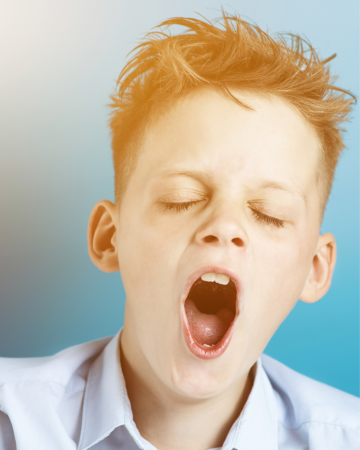
There is something very funny and very revealing about congratulating a child for yawning.
First, they look confused.
Then they laugh.
Then they either own it… or hand it straight back.
“It was you.”
“What have you done to the room?”
“You said yawn.”
“We do that when we’re bored.”
And there it is.
Not just a yawn. A whole lesson in how we humans explain ourselves.
At Crucial Crew, the comments from 83 primary schools and 3500 children and teachers so far gave me more than feedback. They gave me a snapshot of what children are already noticing about themselves, what they are not yet owning, and how quickly responsibility can be passed outside the body.
Some children were beautifully switched on. They said things like “feeling good,” “it helps you calm down,” “a yawn can be stress,” “I feel relaxed,” and even described colours and shapes behind their eyes when yawning.
That is not nothing. That is personal awareness beginning to speak from experiential depth and understandsing.
Research on interoception, our ability to notice and make sense of internal body signals, shows it plays an important role in emotional regulation, self-awareness and daily functioning in children. In simple terms, when children can notice what is going on inside them, they are more able to respond to life with clarity rather than just react to it.
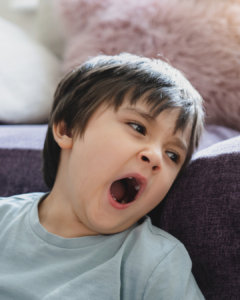
Other children, and some adults too, did what many of us have been trained to do. They explained the yawn away. They blamed the room, the speaker, lunch, tiredness, boredom, the teacher, the lesson, the weather, or the fact that I had dared to mention the word itself. But that is the point. The yawn happened in their body, yet the cause was quickly handed somewhere else. That does not mean they are irresponsible. It suggests that noticing and owning an internal signal is still developing. And that matters, because these same foundations help children recognise stress, discomfort, emotion, overwhelm and choice later in life.
This is why I say: “if we cannot own something as simple and immediate as a yawn, we may struggle to take responsibility for bigger things in life too.”
Not in a shaming way. In a foundational way.
A yawn is small enough to practise with. You don’t need to learn how to do it. It’s safe enough to laugh about and ordinary enough to miss. But that is exactly why it matters. It is one of those everyday human moments where the body speaks before the brain catches up. It create seconds of chaos in the system before clarity kicks back in again, and this is what we have previously struggled with. As if we are not allowed seconds of chaos, yet the world
And yawning is far more interesting than our culture gives it credit for. It is commonly treated as a sign of boredom, rudeness or poor sleep, yet research suggests yawning is also linked with shifts in arousal, regulation of state, and thermoregulation. In other words, part of how the body manages itself. Some studies also suggest yawning shows up around stress, transitions and the body trying to rebalance. So no, a yawn is not simply a child announcing that your lesson is dreadful. Though I’m sure a few teachers have worried about that over the years.
One of my biggest takeway from the days together has been: Until I did it in the session “100% of them have never been congratulated on yawning before.”
Exactly.
Because most people have only ever been corrected for it, teased for it, or told to cover it up and stop being rude. So, when you congratulate a yawn, you interrupt the old script. You turn a moment of embarrassment into curiosity. You say: hang on, let’s notice this. What was happening just before it? What changed after it? What do you feel now?
That tiny change matters. Validation of bodily signals helps children build language for what is happening inside them, and that language is part of regulation. If a child learns to notice “I’m tired,” “I’m stressed,” “I’m calming down,” “I feel safer,” or even “I don’t know what that was but I felt something,” they are already moving towards agency.
Another thing that stood out was the number of children looking at each other or teachers and suppressing yawns. That is social learning in real time. The body wants to do something natural. The group notices. Shame creeps in. The child/adult tries to stop the signal. What we were witnessing with the 83 schools and 3500 children and teachers so far, is a yawn is never just a yawn in a room full of people. It is also a social event.
And then there were the children who said things like, “You yawn in your mums tummy,” “when you see someone else yawn you feel safe,” and “when you’re thinking and you yawn don’t you find the answer?” I love these comments because they are half poetry, half instinct, and closer to the truth than many adults realise. Children often reach for the meaning of something before adults have finished arguing about the mechanism.
What may be the most important part of this whole practice is this: if someone has noticed me yawning — this tiny, ordinary, easily missed action — and instead of shaming me, laughing at me, or telling me off, they have congratulated me on it or invited me to think about it in a positive way, then perhaps I am worth noticing too. Perhaps I matter more than I knew. Perhaps even the parts of me I have overlooked, hidden, dismissed or been embarrassed by are still worthy of kindness, curiosity and attention. The yawn, just like so many people, has been overlooked, underestimated and undervalued for far too long. So when we catch it, welcome it, and shift the message around it, we are doing far more than talking about a body reflex. We are quietly letting children, teachers and each other know: you matter, your signals matter, your feelings matter, and every little part of you matters.
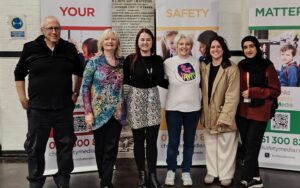
So what is Crucial Crew showing me?
It showed me that children are already telling us an enormous amount through one of the most ordinary actions in the world.
- Some are beginning to own their internal world.
- Some are outsourcing it.
- Some are embarrassed by it.
- Some are fascinated by it.
- Some already know a yawn is not just tiredness.
- Some adults still think it means they are failing at the front of the room.
- Most are already contagiously passing this new information on within their families and friends and work circles. That includes the others agencies at Crucial Crew: the police, traffic police, victim support, drug and alcohol teams, etc in their own meetings and beyond.
The yawn, in that sense, is a wonderful little truth-teller.
It shows us whether an individual is noticing themselves, hiding themselves, blaming the room, or beginning to trust what their body is saying.
And perhaps that is where responsibility really starts.
- Not with a lecture.
Not with a behaviour chart.
But with a tiny, honest moment of body awareness. - A yawn.
Owned.
Not blamed.
Not buried.
Not explained away.
Just noticed.
And what I’ve certainly noticed is – When we stop dismissing the yawn, we stop dismissing the person attached to it.
And from there, who knows what else a child or adult might begin to own! For those of you who have already attending our mini 15 minute workshops you’ve had a brief insight of just one of the programmes that will be huge in childrens development, kids reading blindfolded with ICU Academy teachers.
If you’re interested in joining our forum discussions on the next 5 to 10 years of AI and Education then please do get in touch. We are facilitating groups of no more than 8-12 both face to face and online monthly starting from 14th April in North Manchester.
Find out more about how our work can help your organisation get back on track with small simple steps and have fun at the same time.
Check out Crucial Crew and what they do here:
Rachel Earing
Founder – Live4Energy Training College
Founder – The Great Big Yawn CIC

 by
by 