


RESEARCH AND FIELD STUDIES PAGE


Explore Live4Energy’s responsible field studies into attention, wellbeing, group experience, yawning, place and consciousness in Bury and across the UK.

Research, Fieldwork and Open Questions

Exploring attention, wellbeing, group experience and our relationship with place

Live4Energy Training College develops and facilitates exploratory projects involving human experience, embodied awareness, group participation and the environments in which those experiences take place.

Our work brings together:

  • Participant-reported experience.
  • Structured observation.
  • Reflective journals.
  • Environmental information.
  • Simple measurement tools.
  • Random event generator data.
  • Community participation.
  • Questions that may warrant further investigation.

We are interested in unusual experiences—but interest is not the same as proof.

We therefore distinguish carefully between:

  • What a participant reports.
  • What a practitioner observes.
  • What an instrument records.
  • What can reasonably be concluded.
  • What remains an open question.
Live4Energy combines lived experience, field observation and exploratory data without presenting early findings as established scientific conclusions.

Our Research Principles

Curious Enough to Explore—Grounded Enough to Question

Our research approach is built around six principles.

1. Permission

Participation is voluntary. People choose which activities they undertake and may stop at any time.

2. Transparency

We explain what is being observed, which tools are being used and the limitations of those tools.

3. Separation of Evidence

Personal experiences, practitioner observations and instrument readings are recorded separately.

4. Alternative Explanations

We consider environmental conditions, participant expectations, coincidence, measurement limitations and other reasonable explanations.

5. No Guaranteed Outcome

Participants are not promised a particular feeling, experience or result.

6. Responsible Curiosity

An unusual result may be interesting without demonstrating why it occurred.

[PLACE RESEARCH PRINCIPLES PANEL HERE]

Panel wording:

Observe. Record. Compare. Question.

Curiosity is welcome. Exaggerated certainty is not required.


Current Live4Energy Projects

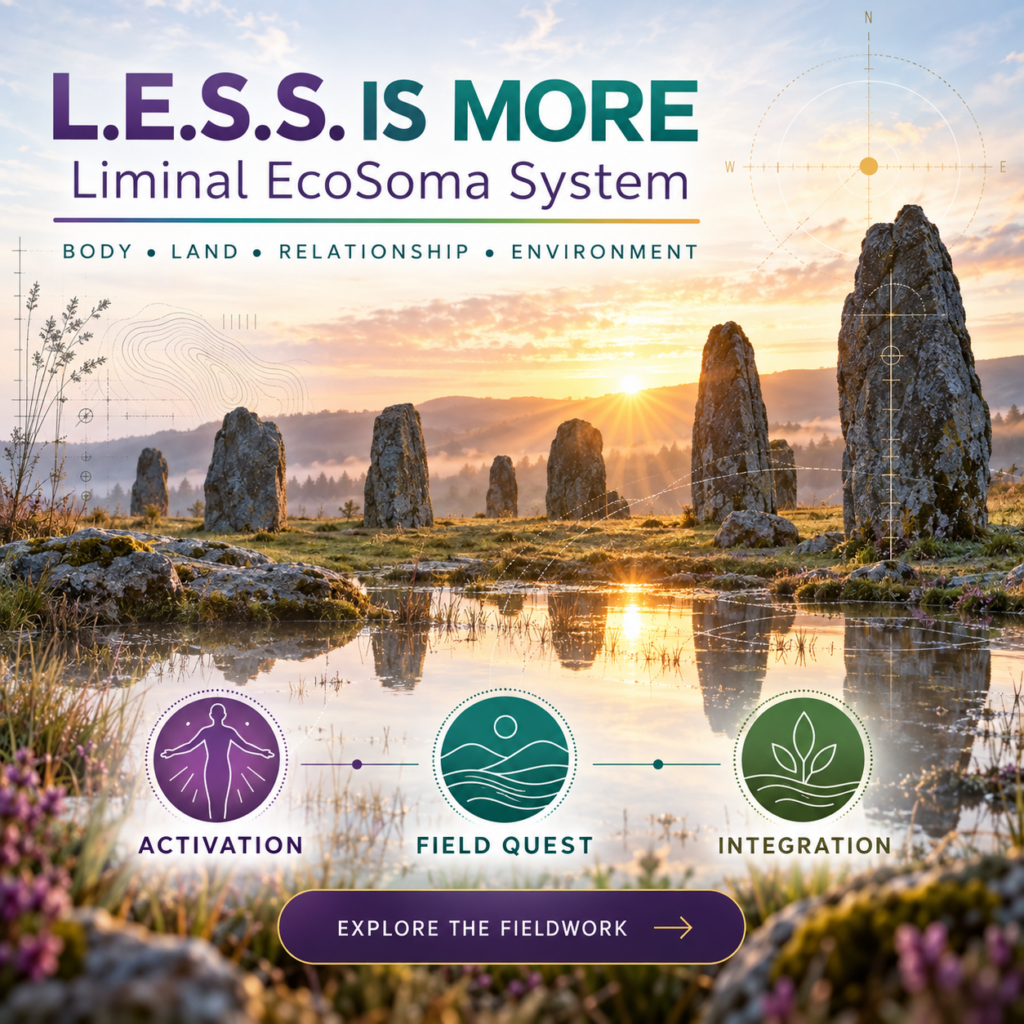
L.E.S.S. Is More Field Studies

Liminal EcoSoma System

L.E.S.S. Is More explores relationships between body, land, human connection and environment.

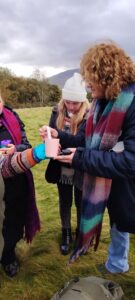
Field experiences have taken place at ancient, historic, natural and community locations including:

  • Cheetham Close.
  • Castlerigg Stone Circle.
  • Wood Well.
  • Radcliffe Tower.
  • Chetham Farm.
  • Ordsall Hall.
  • Meols Sand Dunes.
  • Birkrigg Stone Circle.
  • Hollinshead Hall and Well.
  • Basingwerk Abbey.
  • St Dyfnog’s Well.

Each field journey follows three stages:

Activation

Participants are introduced to the place, establish an intention and record their starting observations.

Field Quest

Participants explore the location through guided attention, embodied awareness, journalling and individual or group activities.

Integration

Participants review what they noticed, what changed, what remained unchanged and what alternative explanations may exist.

Depending upon the location, records may include:

  • Participant journals.
  • Time-stamped observations.
  • Mood or bodily-awareness check-ins.
  • Photographs and video.
  • Weather or environmental information.
  • Water total dissolved solids readings.
  • Practitioner-led dowsing observations.
  • Wyrdoscope random event generator data.
  • Reports of coincidences or synchronicities.

The purpose is not to declare that a site possesses a particular power.

It is to observe what happens when people enter a place with focused attention, shared intention and a willingness to record their experiences.

Wyrdoscope Random Event Generator Exploration

A random event generator—often shortened to REG—produces a continuous sequence of outputs intended to behave randomly.

Wyrdoscope allows these outputs to be recorded and displayed during individual or group activities.

Live4Energy may use Wyrdoscope alongside:

  • Group gatherings.
  • Intention-based activities.
  • Meditation or reflective periods.
  • Environmental field visits.
  • Community events.
  • Business and creative experiences.
  • Clearly time-stamped moments within a programme.

We may examine whether changes in the displayed data appear close to significant moments reported by participants.

What REG Data Can Tell Us

It can show when the recorded output varies from its expected pattern and allow those variations to be compared with time-stamped events.

What REG Data Cannot Tell Us by Itself

A variation cannot, on its own, establish that consciousness, intention, emotion or group activity caused it.

Possible patterns require cautious interpretation, repeated observations and appropriate statistical review.

A pattern can invite a question. It does not automatically provide the answer.


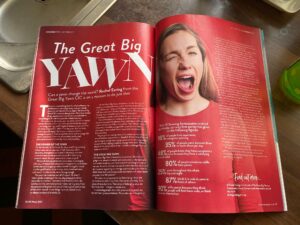
The Great Big Yawn Social Research

The Great Big Yawn CIC investigates people’s experiences when yawning is discussed, permitted and socially normalised.

Its wider purpose is to help change the cultural association of yawning from boredom, apathy and exhaustion towards relief, connection, creativity and possibility.

Live4Energy supports the responsible presentation and development of this work.

The Great Big Yawn’s internal programme records currently include:

  • More than 58,000 recorded yawns.
  • Approximately 5,000 participating pupils, staff and community members.
  • Activity involving around 120 schools.
  • Short, facilitated Yawnathon experiences.
  • Anonymous participant observations and comments.

These figures represent programme and social-participation data. They should not be interpreted as results from a controlled clinical trial.

Future research may examine questions such as:

    • What happens when people are given social permission to yawn?
    • Does talking about yawning affect the urge to yawn?
    • How do participants describe their mood or bodily state afterwards?
    • Does group context affect people’s willingness to yawn openly?
    • How might yawning relate to social connection and emotional regulation?
    • What differences appear across schools, workplaces and community settings?
    • CRUCIAL CREW FINDINGS HERE


It's really odd that just hearing people talk about yawning can make me yawn. Or even just thinking about it.
Survey Comments All Anonymous
The Great Big Yawn Survey
I feel that making a noise when you yawn reacts positively to your nervous system. I also think it's a good stretch for your face

Understanding the Tools We Use

Participant Journals

Journals record an individual’s experience in their own words. They provide valuable qualitative information but remain subjective accounts.

Baseline and Completion Observations

Participants may be invited to describe their mood, bodily sensations, confidence, expectations or sense of connection before and after an activity.

These observations can identify personal changes but do not, by themselves, establish what caused them.

Water TDS Meters

A total dissolved solids meter estimates electrically conductive dissolved substances within water.

It does not measure consciousness, healing, intention or spiritual energy.

Readings may be recorded as environmental observations, with temperature, sampling, handling and device limitations considered.

Practitioner-Led Dowsing

Dowsing is included as an exploratory practitioner method.

Results are recorded separately and are not presented as established scientific measurements.

Wyrdoscope REG Data

Random event generator data can be time-stamped and examined statistically.

Individual deviations do not demonstrate causation and should not be interpreted in isolation.

Photographs and Video

Visual records help document the location, conditions, activity and sequence of events. They do not independently establish why an experience or data variation occurred.

EXPERIENCE

What did participants report?

OBSERVATION

What did facilitators notice?

MEASUREMENT

What did the instrument record?

INTERPRETATION

What may—or may not—explain it?


From Exploration to Stronger Research

Live4Energy’s current projects are developmental and exploratory.

We want this work to become progressively stronger through:

  • Clearer research questions.
  • Consistent protocols.
  • Accurate time-stamping.
  • Defined baseline periods.
  • Transparent inclusion of null results.
  • Appropriate comparison conditions.
  • Larger and more varied participant groups.
  • Independent statistical support.
  • Ethical and safeguarding review.
  • Collaboration with researchers and institutions.
  • Open discussion of limitations.

We welcome thoughtful scepticism.

A well-formed challenge can improve a project just as much as an exciting observation.


Research and Evaluation Partnerships

We are interested in hearing from:

  • Universities and colleges.
  • Independent researchers.
  • Statisticians and data analysts.
  • Psychologists and social scientists.
  • Consciousness researchers.
  • Environmental researchers.
  • Schools and education professionals.
  • Community organisations.
  • Ethical businesses.
  • Funders and sponsors.
  • Documentary and media partners.

Potential collaborations may include:

  • Protocol development.
  • Independent evaluation.
  • Data analysis.
  • Community-based participatory research.
  • Pilot studies.
  • Case-study development.
  • Event observation.
  • Sponsorship of equipment or participation.
  • Funding applications.
  • Responsible public communication.

Help Us Ask Better Questions

Bring your expertise, scrutiny or support to the next stage of Live4Energy’s research.

DISCUSS A RESEARCH PARTNERSHIP WITH US

SUPPORT A CURRENT PROJECT


Research Ethics, Consent and Privacy

Before information is collected or published, the project should clearly establish:

  • The purpose of the activity.
  • What participation involves.
  • Which information will be recorded.
  • How information will be stored.
  • Whether contributions will be anonymous.
  • How photographs and video may be used.
  • Who will have access to the information.
  • How a participant may withdraw.
  • The limitations of the activity.
  • Relevant safeguarding arrangements.

Sensitive personal information and identifiable children’s information require additional care and appropriate consent.

Participation in a Live4Energy activity does not require permission for somebody’s photograph, video, testimonial or personal data to be published.


About Rachel Earing

Rachel Earing is the founder of Live4Energy Training College and the facilitator behind its developing programme of experiential fieldwork and community research.

Her work brings together education, community participation, personal development, embodied awareness, creativity and responsible exploration of human potential.

Rachel’s approach is grounded in three principles:

Permission

People choose how and whether to participate.

Witnessing

Experiences can be heard without being dismissed or forced into a predetermined explanation.

Curiosity

An unusual observation can be explored without being exaggerated into certainty.
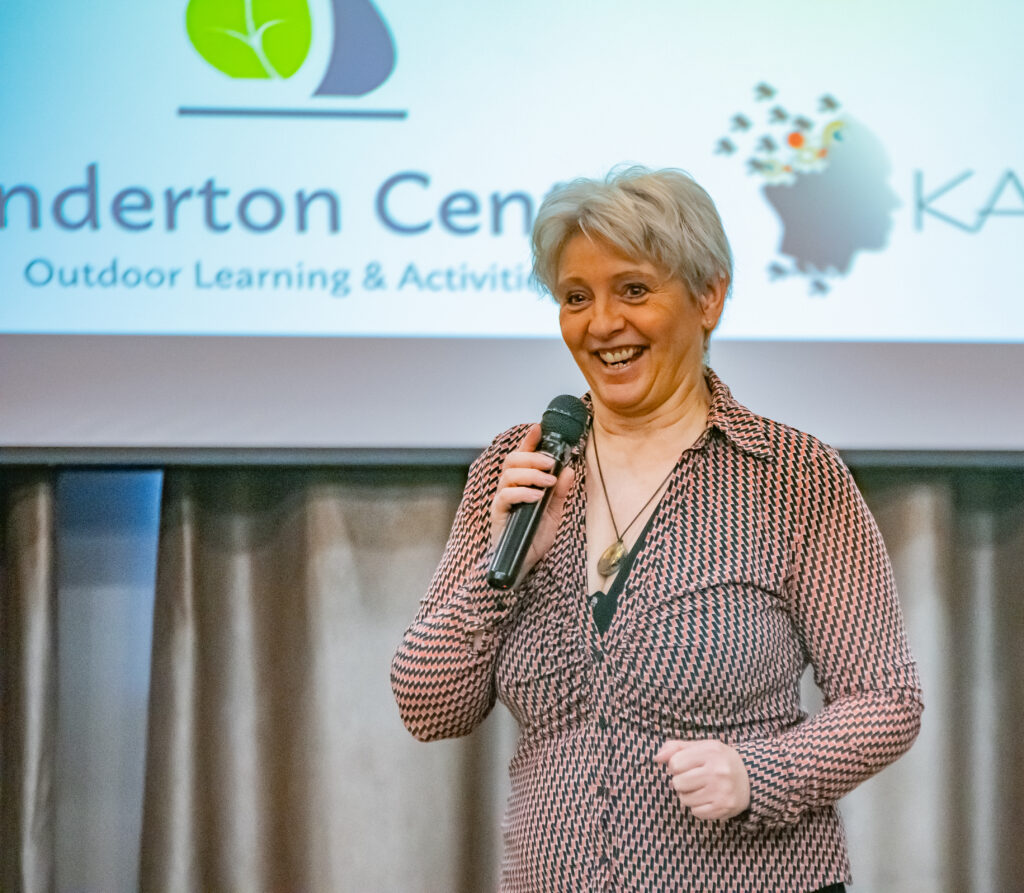
Rachel Earing
Founder, Live4Energy Training College
Bury, Greater Manchester

[BUTTON: MEET RACHEL]


Explore, Participate or Collaborate

Participate

Join a virtual field journey, community study or new site visit.

Partner

Bring professional, academic, community or evaluation expertise.

Support

Help fund equipment, participation, analysis or independent evaluation.

Ask a Question

Contact Rachel if you would like clarification about a method, result or possible collaboration.


Rachel Earing
Live4Energy Training College
Bury, Greater Manchester


IMPORTANT INFORMATION

Live4Energy’s field studies are exploratory unless a project is expressly described as formal research undertaken with an identified research institution.

Activities are not medical diagnosis or treatment and do not replace healthcare, psychological, educational or professional advice.

Personal experiences, testimonials and preliminary observations are not guaranteed outcomes.

Where findings are shared, we aim to identify the method used, the limitations of the information and the difference between recorded observation and interpretation.